
The Emperor's Courtyard
The Kaiserhof (Imperial Courtyard) is the most representative of the ten courtyards in the Residence. It was built in the 1610s under Duke Maximilian I, when the imperial guest rooms in the west wing were constructed – chambers reserved exclusively for visits by the Emperor, which explains its name.
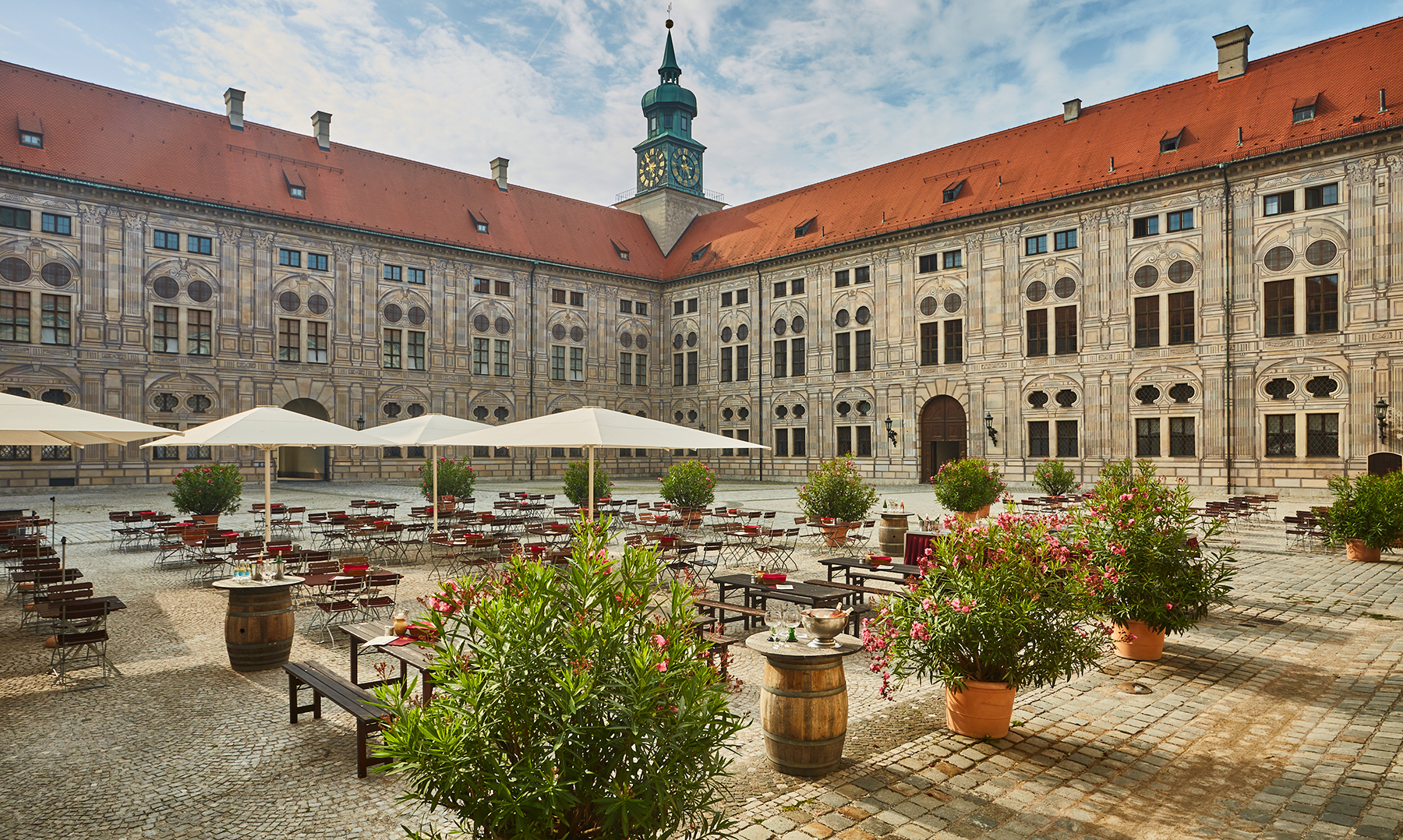
The courtyard façades enclose an area of 3,717 square metres and are uniformly painted in the fresco style of Italian Renaissance art.
Where Once Only the Emperor Was Admitted
The Kaiserhof is the most representative of the ten courtyards of the Munich Residence – and it was not meant for everyone. When Duke Maximilian I had the wings around this monumental inner courtyard built between 1612 and 1616, he created a place of the highest ceremonial rank. In the north wing, the magnificent Imperial Staircase led to the reception rooms; in the west wing lay the legendary Stone Rooms – that sequence of chambers furnished with marble and precious tapestries, reserved exclusively for the Emperor of the Holy Roman Empire and his consort.
The name derives from this exclusive purpose: only during imperial visits and high-ranking ceremonies did the gates of this courtyard open. The courtyard facades, enclosing a ground area of 3,717 square meters, were uniformly painted in the fresco style of Italian Renaissance – a total work of art that demonstrated the power and artistic sensibility of the Wittelsbachs to visitors the moment they entered. In the 17th century, the adjacent Stone Rooms were considered the largest and most significant suite of rooms in the entire Residence.
The bombing raids of World War II destroyed large parts of the complex. Of the former 23,500 square meters of roof area in the Residence, only 50 square meters remained intact. The wings around the Kaiserhof were reconstructed in the 1980s, the historic frescoes of the facades restored. A renovation with 75 million euros in investment was completed in 2023.
From Imperial Courtyard to Beer Garden
Today, the Kaiserhof uniquely combines history and present. Where once only crowned heads and highest dignitaries were admitted, guests of the Pfälzer Weinstube now enjoy their Schoppen under the open sky. The historic facades with their Renaissance painting form the backdrop for one of Munich’s most extraordinary open-air venues.
The Viersäulensaal in the adjacent ground floor, today the heart of the wine tavern, originally served as the entrance hall to the imperial guest chambers above. Thus a circle closes: the Pfälzer Weinstube, founded in 1950 as an ambassador of Palatinate wine culture in Bavaria, has found its place at a location that has been welcoming people for over 400 years. Only now, it is no longer the Emperor who is the guest, but anyone who appreciates Palatinate wine and hospitality.
Beneath the frescoes of the Wittelsbachs, surrounded by the walls that once were meant to demonstrate a duke’s power, what has connected Bavaria and the Palatinate for centuries is now celebrated: the joy of a fine vintage and convivial company.